Velvet Pumpkins vs Ceramic Pumpkins: Which Looks Better and Lasts Longer?
Velvet Pumpkins vs Ceramic Pumpkins: Which Looks Better and Lasts Longer?
Velvet pumpkins and ceramic pumpkins do different jobs. Velvet adds soft color and volume without much weight; ceramic gives an arrangement a focal point that reads clearly from across the room.
For most homes, the useful question is not which material wins outright. It is where each one belongs, how well it stores, and which construction details keep it looking good for more than one season.
FestTree is reader-supported. As an Amazon Associate we earn from qualifying purchases.
Top picks in detail

16-piece rustic velvet pumpkin set
Approx. $10-20 tier
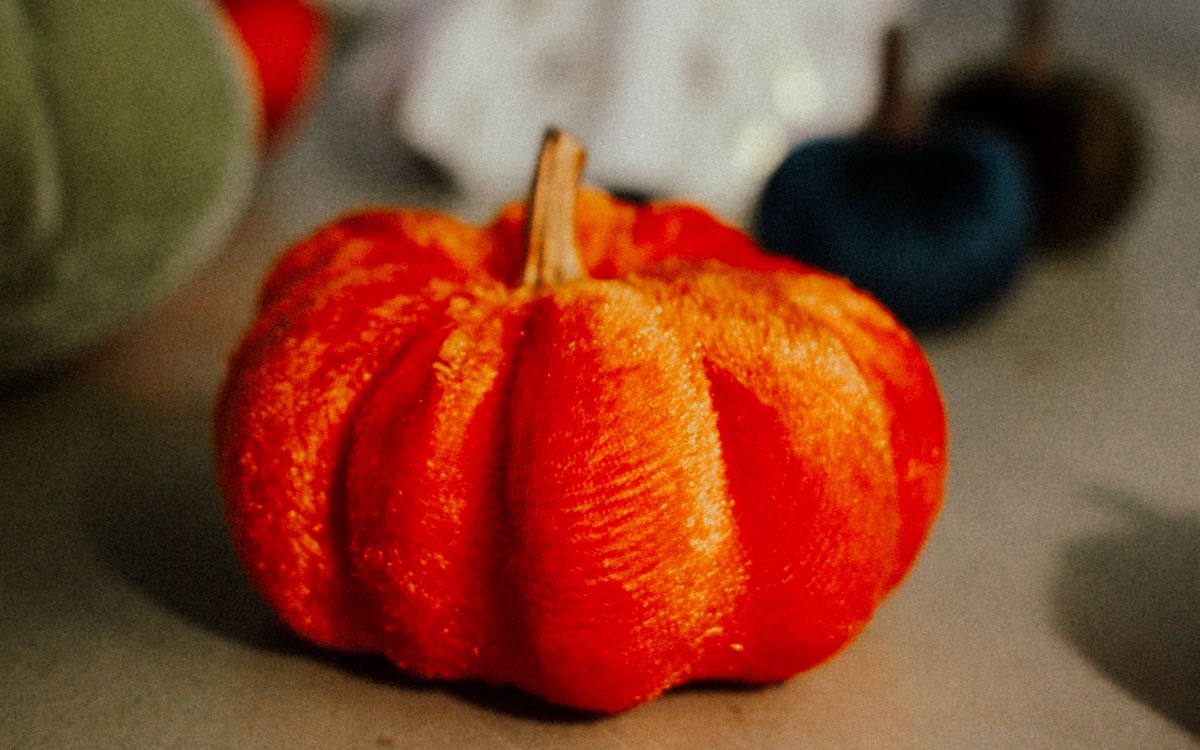
This set is the most complete soft layer in the group. The mix of 2.9-inch and 3.7-inch widths makes it easier to build a low arrangement than a one-size bag, while the muted rust, gold, olive, and gray palette works beyond Halloween.
Buyers consistently like the rich color mix, polished look, and value of receiving enough pieces for a table or mantel. Compared with cotton-filled velvet pumpkins, these use a firm foam core: that makes them lighter and better at holding shape, but less tactile.
Watch-out: These are firm decorative pieces, not squishy pillows. The molded stems can read more artificial at close range, so keep the set as a supporting layer rather than the focal object.
Standout features
- Sixteen pieces cover a long runner or several smaller surfaces
- Two sizes create more rhythm than a uniform mini set
- Rust, gold, olive and gray bridge early fall through Thanksgiving

6-piece weighted velvet pumpkin set
Approx. $10-20 tier
Choose this set when the pumpkins will be touched, viewed close up, or placed on an open shelf where weight matters. The cotton filling creates a softer profile than molded foam, and small internal weights help the pieces sit more securely.
The richer colors, soft velvet, and useful softball-like scale make each piece more convincing at close range. It costs about the same as larger foam assortments but spends more of that value on individual construction rather than piece count.
Watch-out: The shiny gold molded stems can look less natural than the fabric bodies, and isolated feedback mentions loose top stems. Inspect each attachment before packing the set away.
Standout features
- Cotton filling gives the surface a softer shape
- Internal weighting helps each piece stay planted
- Six distinct colors work as a compact collected group

12-piece mini velvet pumpkin set
Approx. $10-20 tier
These minis solve a filler problem rather than a focal-point problem. The 12-piece count and three-color mix are useful in a dough bowl, glass jar, cornucopia, or tiered tray where a larger pumpkin would crowd the arrangement.
The true-to-listing colors, easy handling, and low per-piece cost explain the set’s value. Compared with the weighted six-piece set, these are much lighter and smaller, so they are easier to scatter but less convincing when displayed alone.
Watch-out: The recurring surprise is scale: several pieces read as egg-sized in person. Use them around a larger anchor and verify the dimensions before ordering.
Standout features
- Twelve pieces provide enough repetition for a bowl or tray
- Orange, brown and champagne keep the palette traditional
- Light foam cores are easy to layer around candles or greenery

Best starting focal
7.5-inch-tall white-and-gold ceramic pumpkin
Approx. $10-20 tier
This is the practical bridge between lightweight filler sets and premium hand-painted ceramic. At 6.8 inches wide and 7.5 inches tall, it can anchor a console, mantel, or table arrangement without demanding the footprint or budget of a collector piece.
On the exact White Ceramic Pumpkin option, the glossy finish and polished white-and-gold palette give the piece a clean neutral presence. The one-piece body also avoids a loose lid, which is useful when the pumpkin is moved between rooms.
Watch-out: The listing combines ceramic and plush variants. Confirm that the selected option says White Ceramic Pumpkin before checkout so the material and review context match this recommendation.
Standout features
- A 6.8-inch-wide body has enough scale to anchor small fillers
- Glossy white ceramic cleans more easily than fabric
- The gold stem works with neutral, modern, and Thanksgiving palettes

8.5-inch-wide hand-painted orange ceramic pumpkin
Approx. $50-60 tier
This is the spend-once focal piece in the lineup. The hand-painted earthenware body, sculpted harvest details, and broad 8.5-inch diameter give it enough presence to work without a large surrounding cluster.
Reviewers consistently praise the finish, visual weight, and heirloom-like feel. It costs several times more than a velvet assortment, so its value depends on whether you want one long-lived anchor rather than many lightweight fillers.
Watch-out: The line includes several silhouettes and sizes, and buyers report that color and proportions can read darker or slimmer than expected. Measure the footprint and confirm the exact 7.5-inch variant.
Standout features
- Hand-painted earthenware has more depth than molded foam or resin
- A 7.5-by-8.5-inch shape reads clearly from across a room
- Sculpted leaves, acorns and stem make it a stand-alone focal piece
3-piece paintable ceramic pumpkin set
Approx. $25-35 tier
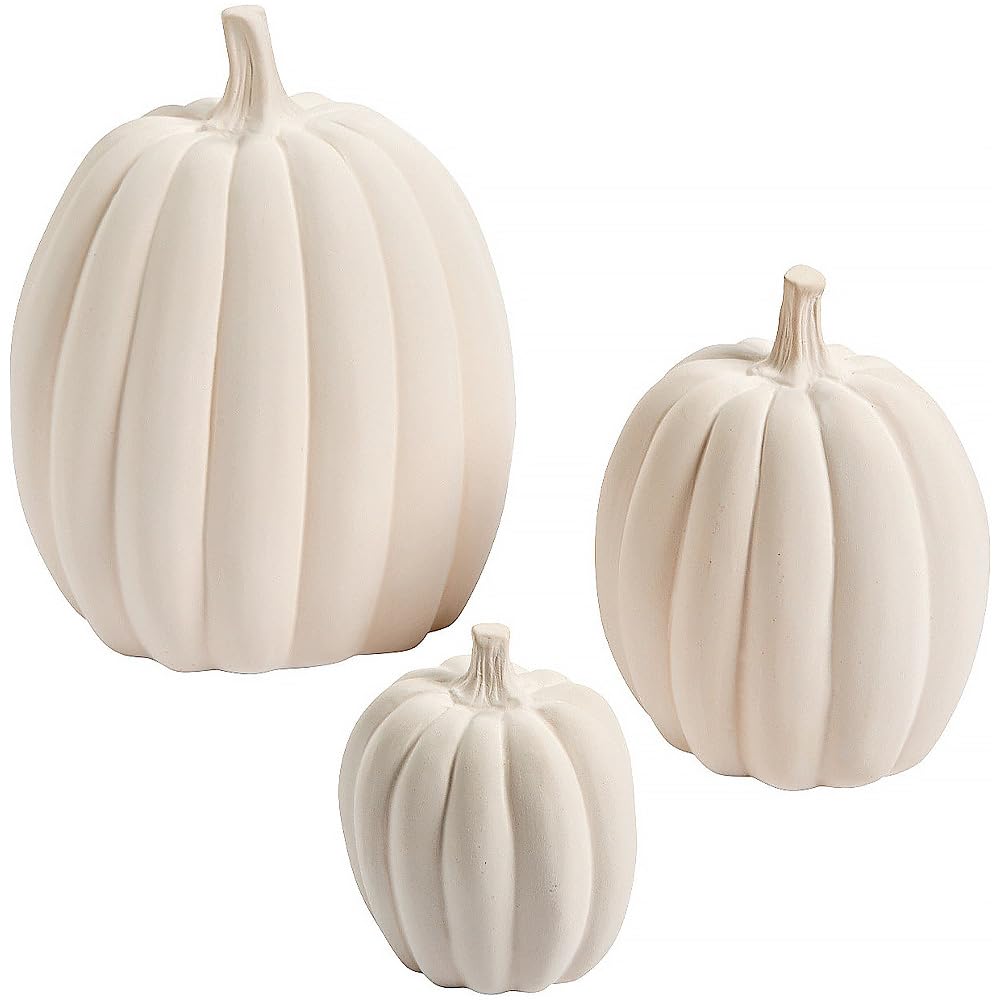
The 4-inch, 6.5-inch, and 8.5-inch heights create a more deliberate cluster than three same-size pumpkins. The unfinished ceramic surface is the point: it gives you control over color, sheen, and whether the group leans modern, traditional, or Halloween.
Buyers repeatedly describe the surface as easy to paint and the pieces as satisfyingly substantial. Compared with a finished ceramic set, though, this one asks for prep and paint before it earns a place in the room.
Watch-out: The bodies are narrower and more oval than some photos suggest, and the ceramic is fragile. Buy it as a craft project, keep the fitted foam, and inspect all three pieces before painting.
Standout features
- Three heights create a ready-made graduated grouping
- Unglazed ceramic accepts paint and custom finishes
- Fitted foam packaging can be reused for safer storage

6-piece black-and-white mini ceramic set
Approx. $20-30 tier
This is not the universal ceramic choice. It is the useful crossover for a room that moves from neutral fall into Halloween: the black-and-white palette and gold stems add a sharper seasonal cue while the pumpkin shape still works with amber, rust, and cream.
Buyers often like the coordinated patterns, reusable packaging, and elegant look at close range. The minis work best in a tray or mantel cluster, and they create a natural bridge into a modern Halloween scheme.
Watch-out: The pieces are small, and feedback includes occasional paint chips or uneven finishing. Inspect every surface on arrival and keep the set for modern or Halloween-leaning rooms.
Standout features
- Six coordinated patterns create a finished mini grouping
- Black, white and gold connect modern fall with Halloween
- Ceramic surfaces wipe clean after display
Velvet and ceramic picks compared
Choose by the job the pumpkin needs to do: fill space softly, hold a low arrangement together, or provide one durable focal point.
16-piece rustic velvet pumpkin set6-piece weighted velvet pumpkin set12-piece mini velvet pumpkin setTop pick7.5-inch-tall white-and-gold ceramic pumpkin8.5-inch-wide hand-painted orange ceramic pumpkin3-piece paintable ceramic pumpkin set6-piece black-and-white mini ceramic setHow to choose
Choose velvet if
- You need several low pieces for a runner, bowl, tray, or shelf
- Children, pets, or frequent handling make breakage a concern
- Compact, lightweight storage matters more than visual weight
Choose ceramic if
- The room needs one focal object that reads from several feet away
- You prefer a wipe-clean surface and can provide padded storage
- A polished finish matters more than piece count or softness
The practical verdict: use both materials
Velvet and ceramic are not interchangeable. Velvet pumpkins are a volume tool: they repeat color, soften hard surfaces, and fill awkward gaps without adding much weight. Ceramic pumpkins are an anchor: one glossy or hand-painted piece gives the eye somewhere to stop. Velvet absorbs light, so its color looks deeper and softer in warm rooms; glazed ceramic reflects ceiling and accent light, creating sharper highlights.
That distinction matters more than a blanket durability claim. A firm-core velvet set can keep its shape for years indoors, but it will still collect dust and can fade in strong sun. Ceramic can last much longer, yet one unpadded storage bin or a fall from a crowded mantel can end its life immediately.
For a balanced display, start with one ceramic focal pumpkin and add three, five, or seven velvet pieces around it. The hard-soft contrast looks more collected than an all-matching set, and it lets you spend on the one object whose finish is visible from across the room.
Construction details that decide reuse value
For velvet, look past the fabric color. Firm foam cores are light, consistent, and good at holding a crisp pumpkin shape, but they feel decorative rather than plush. Cotton-filled bodies create softer folds; a small internal weight helps them stay upright on open shelves and busy tables.
Stem attachment is the common weak point. A sewn or deeply anchored stem generally survives packing better than a lightly glued plastic piece. Before the return window closes, hold the body rather than the stem, then gently check whether the top shifts. Never lift a soft pumpkin by its stem.
For ceramic, inspect glaze coverage, the base ring, protruding leaves or acorns, and any stem joint. Hand-painted color can vary slightly, which is part of the appeal, but chips, hairline cracks, and rocking on a flat surface are defects worth catching immediately.
Packaging is part of the product. Fitted foam or molded inserts are more useful than loose paper because they become the off-season storage system. If a ceramic piece arrives safely in a shaped insert, label the box and keep that insert rather than starting over with a crowded tote.
Where velvet and ceramic work best
Use velvet on dining runners, coffee-table bowls, tiered trays, bookshelves, and any surface that gets bumped. Keep dining pieces low enough that people can see across the table; a line of small velvet pumpkins usually works better during a meal than one tall arrangement.
Use ceramic on a mantel, console, sideboard, or the center of a low table where the finish can be seen but hands and elbows are less likely to reach it. A larger ceramic pumpkin needs breathing room. Crowding it with several objects of the same height makes an expensive focal piece disappear.
The black-and-white mini set is the exception to the neutral fall rule. It earns its place when the room will shift into Halloween, especially beside black candlesticks or amber glass. For a softer harvest or Thanksgiving room, keep the ceramic anchor white, warm orange, or unpainted and move the sharper pattern into the Halloween bin.
Cleaning and off-season storage
Use a lint roller or soft upholstery brush on velvet. For a small mark, test a barely damp cloth on the underside first and blot rather than rub. Do not machine-wash a foam-core or weighted decorative pumpkin unless the listing specifically says it is washable.
Wipe glazed ceramic with a soft damp cloth and dry it before boxing. Unglazed craft ceramic is more porous, so remove loose dust before painting and seal the finished surface if the paint system calls for it.
Store velvet loosely enough that stems are not bent and fabric is not crushed. Store ceramic individually in its original insert or wrap each piece before placing it in a rigid box. Never let a heavy ceramic anchor sit on top of soft pumpkins; the pressure can flatten the body and loosen stems over the off-season.
When to buy each material
Velvet filler sets have many substitutes. If one color mix sells through, another set in the same size and construction usually appears. Distinctive ceramic silhouettes, hand-painted finishes, and matched pattern sets are harder to replace once seasonal stock thins.
Buy the exact ceramic focal piece first, especially if its size and finish complete a planned mantel or console. Add velvet fillers later after confirming how much empty space remains. This order avoids buying too many small pieces and protects the part of the display that is least interchangeable.
Frequently asked questions
Do velvet or ceramic pumpkins last longer?
Ceramic usually has the longer potential lifespan when it is stored in fitted padding and protected from falls. Velvet can still last for many seasons indoors, especially when the stem is secure and the fabric is stored without crushing.
Are velvet pumpkins washable?
Most decorative velvet pumpkins are not machine-washable because the fabric wraps foam, cotton filling, weights, or glued stems. Use a lint roller or soft brush, and spot-clean only after testing a hidden area.
Are ceramic pumpkins safe around children and pets?
Use ceramic only on stable surfaces outside active paths and play areas. Velvet is the lower-risk choice for coffee tables, lower shelves, and rooms where decor is likely to be touched or bumped.
How many pumpkins should I use in one display?
Start with one larger ceramic anchor and three to seven smaller velvet fillers. Odd-numbered groups create a natural rhythm, but the surface should still have open space around the arrangement.
Can black-and-white ceramic pumpkins work for fall and Halloween?
Yes. Pair them with rust, amber, cream, or natural wood for early fall, then add black candlesticks or darker foliage for Halloween. They are a crossover choice rather than the most flexible Thanksgiving palette.
About this guide
This guide compares each product by material construction, scale, placement role, storage demands, pricing behavior, availability, and recurring customer feedback. It is editorial research, not a hands-on test.
Positive feedback patterns explain why a product earns a place; recurring complaints become the Watch-out for that specific item. Confirm the current listing details before ordering because options and availability can change.