LED vs Incandescent Christmas Lights: Which Should You Use?

Christmas Decor - Lighting Guide
LED vs Incandescent Christmas Lights: Which Should You Use?
LED vs incandescent Christmas lights is not a one-winner decision. LED makes long runs, timers, and color effects easier; incandescent still earns a place when warm filament glow and vintage bulb character matter more than lower heat or power use.
The useful comparison is by decorating job. A roofline needs different wiring and repair access than a close-view tree, and a smart color display creates different failure points than a simple mini-light string.
FestTree is reader-supported. As an Amazon Associate we earn from qualifying purchases.
Top picks in detail

Best overall
100-count warm-white replaceable-bulb LED string
Approx. $15-20 tier
This is the most balanced starting string in the group. Its 100-count, 21.6-foot format is familiar enough for a standard tree, while replaceable bulbs and fuses avoid the all-or-nothing maintenance tradeoff of a sealed strand.
The recurring strengths are crisp light, straightforward installation, and green wire that recedes into foliage. It will read brighter and more precise than a filament mini-light set, so use it as the practical backbone rather than expecting a soft vintage glow.
Watch-out: Confirm the selected Warm White option before checkout because the listing mixes color language across variants. Bench-test the full string and one replacement bulb before wrapping a tree.
Standout features
- A 21.6-foot green-wire run fits standard trees and compact railings
- Replaceable bulbs and fuses preserve service access
- Connectable construction supports a larger coordinated display

100-count clear-wire eight-mode LED string
Approx. $15-20 tier
Choose this over a green-wire string when the cord will cross a white window frame, painted mantel, or pale artificial tree. The 33-foot run and long lead solve placement problems that a shorter standard string can leave visible.
Users tend to value the easy setup, generous coverage, and mode choices. The tradeoff is added electronics: the controller and plug connection introduce failure points that a basic steady-on string does not have.
Watch-out: Low-star feedback includes controller failures, visible flicker, and strain near the plug. Test every mode for a full evening, and protect the plug even where the string itself is listed for indoor or outdoor use.
Standout features
- Clear wire disappears against pale walls, windows, and white trim
- Eight lighting modes support steady and animated scenes
- A long lead gives the decorated area breathing room from the outlet

50-count sealed-bulb outdoor LED string
Approx. $10-20 tier
This short-run option favors outdoor simplicity over bulb-level repair. The sealed construction and substantial-feeling green wire make sense on a small railing or shrub where moisture exposure matters more than individual bulb replacement.
Positive feedback centers on warm color, easy setup, and solid outdoor performance. Compared with the serviceable 100-count pick, however, a failed section sends you back to fuses, connections, or the entire strand rather than a single removable bulb.
Watch-out: Recurring complaints include half-strand and rain-related failures. Test the strand in a sheltered outdoor location before final installation, because sealed bulbs cannot be replaced one by one.
Standout features
- A 25-foot run covers a compact porch rail or small shrub
- Sealed non-removable bulbs reduce exposed bulb connections
- Green wire and warm-white light suit foliage-based displays
300-count smart RGB LED string
Approx. $25-35 tier
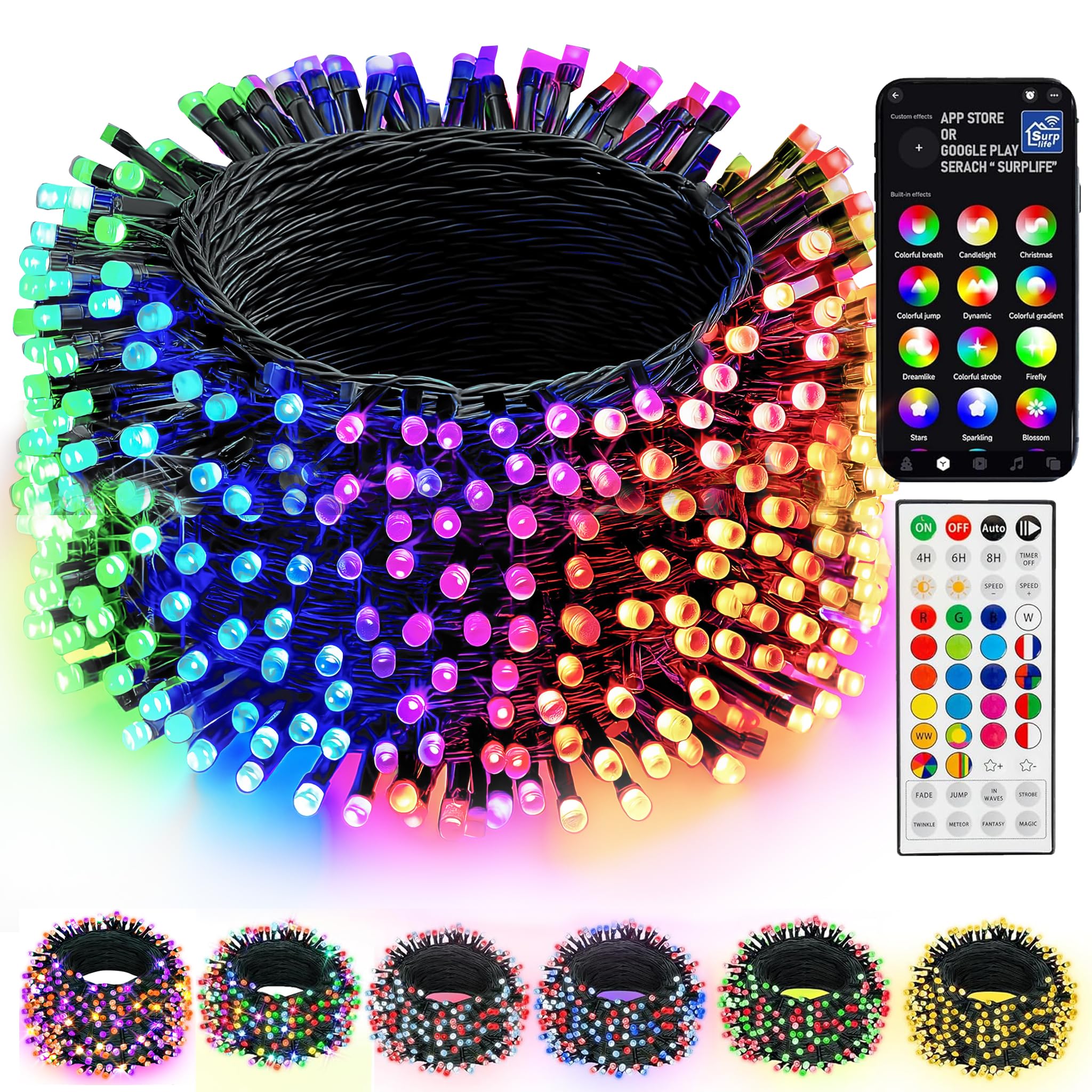
This is the effects specialist, not the default reliability pick. Nearly 100 feet of programmable RGB light can carry a full party room, large tree, or color-themed display without buying several incompatible controllers.
The strongest feedback is about coverage, bright color, and the range of scenes available from the app or remote. Those same controls create the main risk: if the controller, remote, or app connection fails, a long working string can still become frustrating to operate.
Watch-out: Test the app, remote, manual control, timer, and preferred colors before installation. This string does not connect end to end, and the controller should stay dry and accessible.
Standout features
- A 98-foot lit run covers a large tree or continuous room edge
- App and remote controls add color, timer, and music-sync options
- One continuous string avoids matching several separate effect controllers
250-count long-run timer LED string
Approx. $20-30 tier
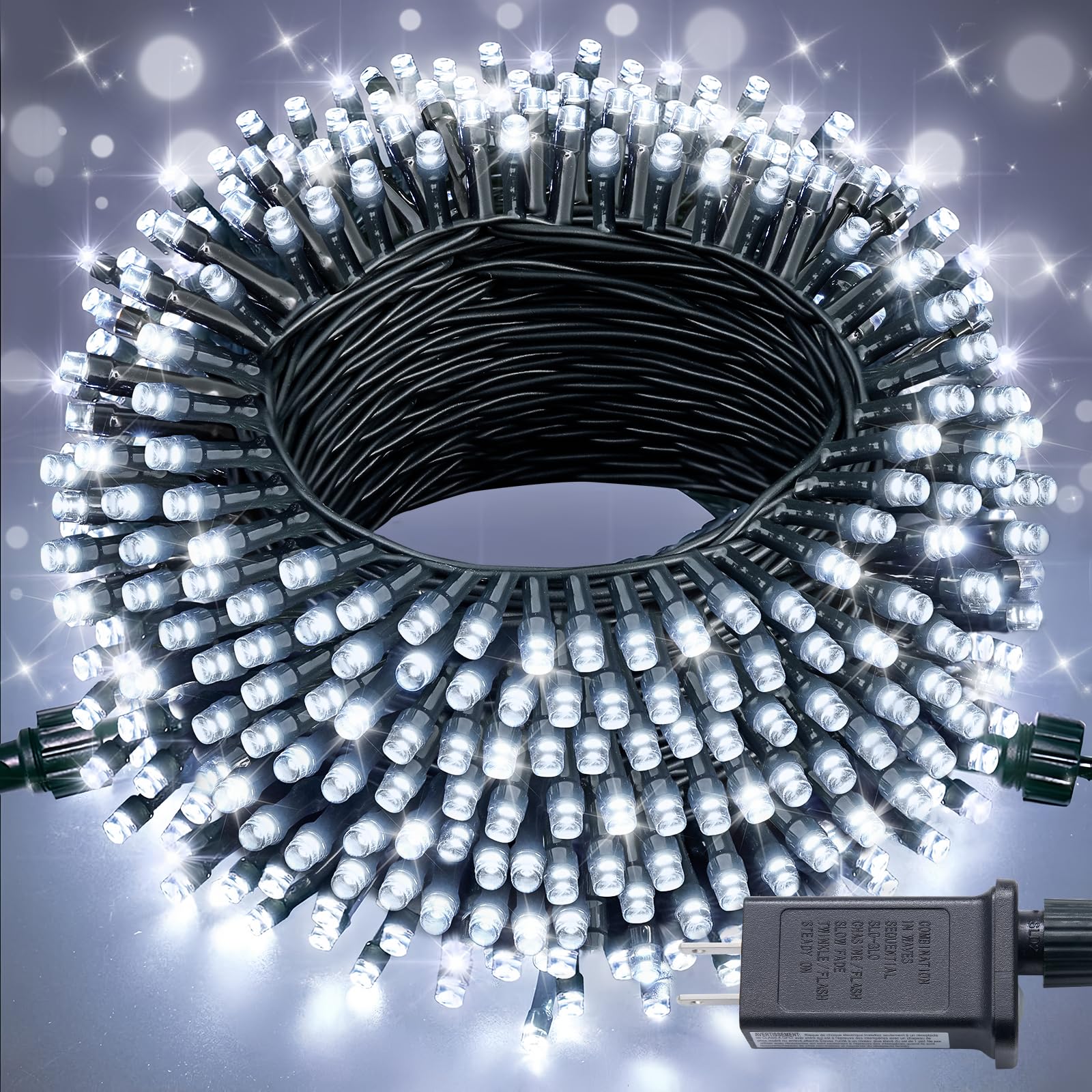
Use this when removal effort matters almost as much as purchase price. One 250-count run can cover a long railing, fence section, or room perimeter with fewer plugs and mismatched gaps than several short strings.
Shoppers often praise the coverage, bright output, and easy setup. A long strand also raises the cost of an early failure: taking down 90 feet of installed wire is much more disruptive than replacing one short section.
Watch-out: Selected-variant feedback includes dim output, shorts, and complete failure around the first month. Run the six-hour timer cycle several times and weather-test the strand before attaching it permanently.
Standout features
- A 91.5-foot run reduces the number of joins across a roofline or railing
- Eight modes and a six-hour timer handle nightly operation
- Connectable design supports larger projects when load limits are followed
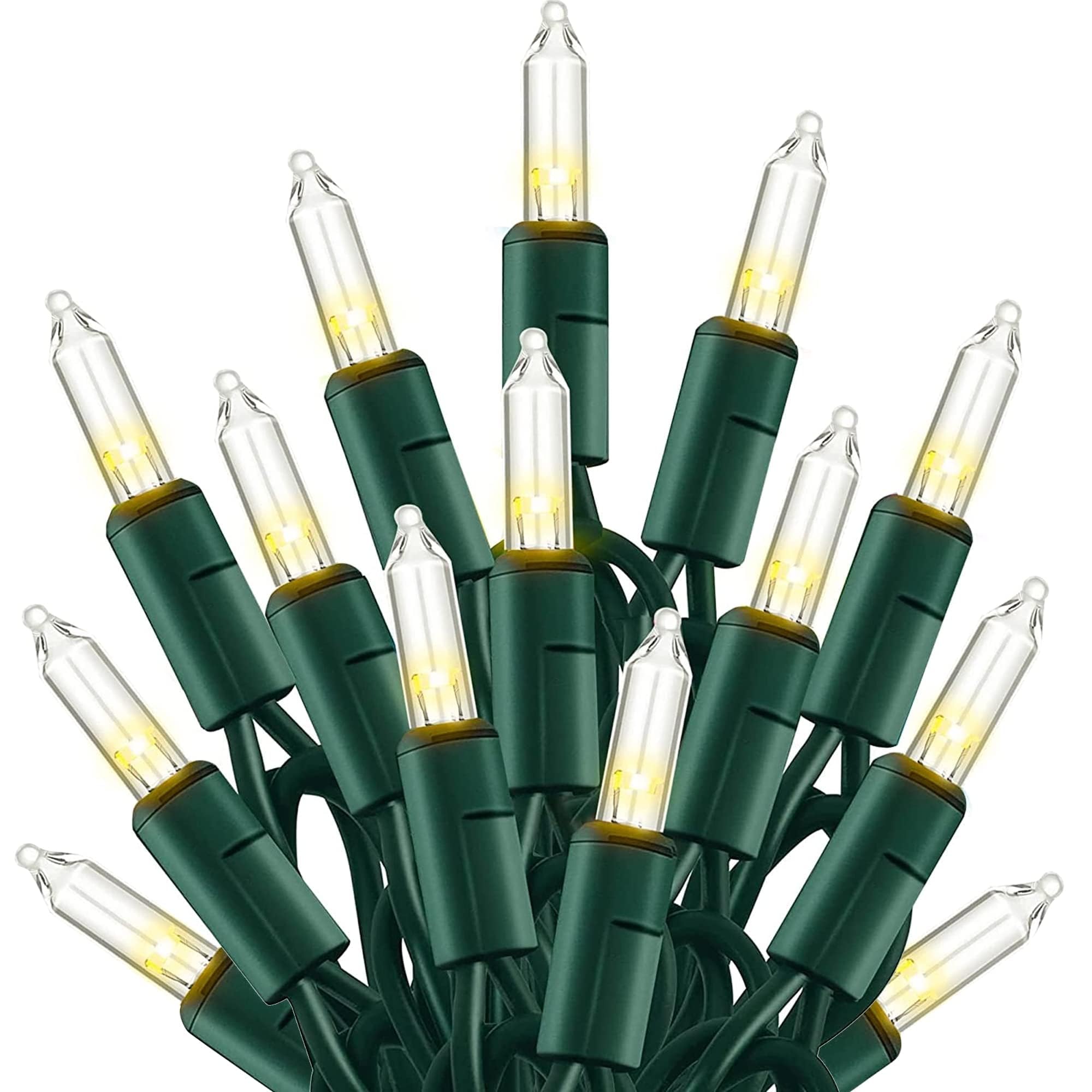
100-count warm-white incandescent mini-light string
Approx. $8-15 tier
This is the honest incandescent reference point: inexpensive, simple, and warmer at close range than most bright mini LEDs. It belongs on a tree, mantel arrangement, or interior window where the light itself is part of the atmosphere.
The low-tech plug-in setup and soft filament color are the recurring appeal. In exchange, the strand runs hotter, connects in shorter chains, and asks for more attention to loose bulbs and wire condition.
Watch-out: Loose wiring can disable half a strand, and outdoor durability feedback is mixed. Uncoil and test every section before decorating, then use it in a protected placement and inspect the wire each season.
Standout features
- Filament bulbs create the soft continuous glow many LED strings imitate
- A familiar 20-foot format fits a standard tree section
- Spare bulbs, flasher bulbs, and a fuse support basic maintenance

100-count multicolor incandescent mini-light string
Approx. $8-15 tier
Choose this for color that looks deliberately old-school rather than digitally programmable. The red, blue, green, orange, and pink bulbs create the uneven filament warmth associated with family trees and vintage window displays.
The appeal is immediacy: plug it in, replace a failed bulb, and avoid an app or controller. Coverage is modest, so this is better as one concentrated layer than as a whole-yard solution.
Watch-out: Low-star reports include early strand failure and isolated electrical defects. Inspect every socket, wire, and plug before use, and return the set rather than operating it if insulation or connections look damaged.
Standout features
- Classic multicolor bulbs create a recognizable nostalgic palette
- The 20-foot format works as one tree layer or a compact window outline
- Replaceable bulbs and a spare fuse keep simple repairs possible

300-count clear incandescent long-run set
Approx. $20-30 tier
This is the incandescent answer to a large tree or continuous interior garland. Two 150-count sections give more placement flexibility than a single 300-bulb cord while keeping the color temperature consistent across the display.
Warm ambience and broad coverage drive the positive response. The weak point is section failure: when a third of a long installation goes dark, the saved plug count stops feeling like a convenience.
Watch-out: Test both 150-count sections flat, flex the connections gently, and leave access for removal. Reports of section and whole-strand failure make permanent or hard-to-reach installation a poor fit.
Standout features
- Two 150-count sections provide 300 bulbs without one fixed layout
- Clear filament light creates broad warm ambience
- Spare bulbs and fuses support traditional troubleshooting
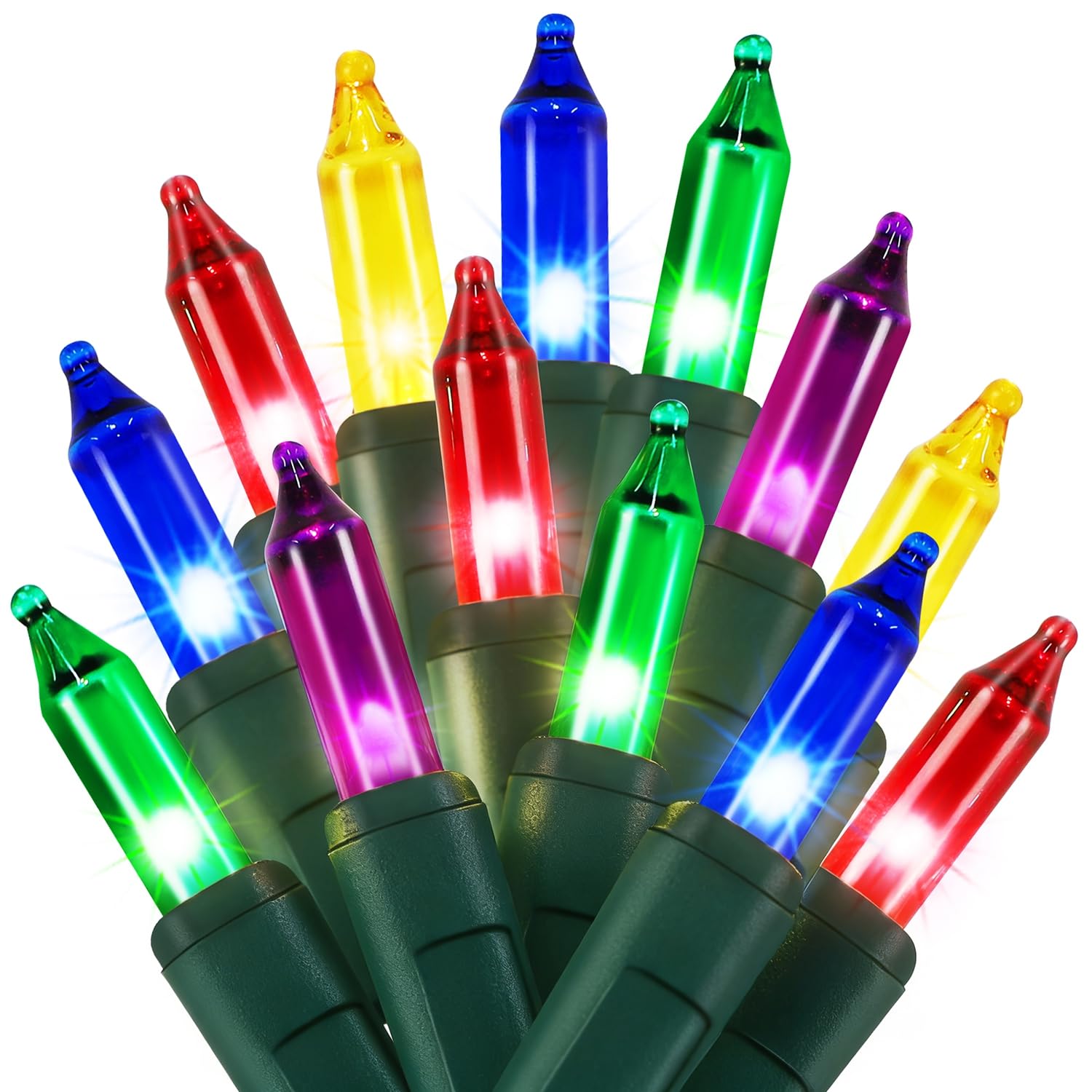
three-pack multicolor incandescent mini-light strings
Approx. $25-35 tier
The value here is separation. Three matching strings can light two shrubs and a window, or several small trees, without forcing one long wire to cross undecorated space.
The warmer multicolor character and flexible three-pack coverage are the real strengths. Output is more ambient than high-impact, and the flasher bulbs create a coordinated blink rather than a subtle random twinkle.
Watch-out: Test all three strings and the flasher effect before dividing the set across the house. Feedback includes dim output and early shorts, so do not assume every coil in the pack behaves identically.
Standout features
- Three independent 100-count strings split easily across separate zones
- Stackable plugs reduce outlet crowding where the installation permits
- Included flasher bulbs can add an optional animated effect

25-foot clear C9 glass-bulb incandescent string
Approx. $20-30 tier
This is the focal string, not the utility string. Large clear C9 bulbs remain visible in daylight and create a warmer, more architectural edge than mini lights, which is why they still earn a place on porches and vintage rooflines.
The glass filament look and replaceable bulbs make the set feel genuinely old-school. That character comes with fragile shipping, higher wattage, and more physical installation care than any LED pick in this guide.
Watch-out: Open the box over a protected surface and inspect every bulb for cracks. Mount and support the empty cord first, then install the glass bulbs; keep spare C9 bulbs on hand for progressive failures.
Standout features
- Twenty-five clear C9 glass bulbs create visible vintage scale
- Individual bulbs are replaceable and dimmable
- A 25-foot cord suits a porch edge, roofline accent, or large garland
LED and incandescent Christmas lights compared
Choose by the job, not the technology label alone. Compare lit length, wire color, controls, replaceability, installation access, and the exact indoor or outdoor rating before buying.
Top pick100-count warm-white replaceable-bulb LED string100-count clear-wire eight-mode LED string50-count sealed-bulb outdoor LED string300-count smart RGB LED string250-count long-run timer LED string100-count warm-white incandescent mini-light string100-count multicolor incandescent mini-light string300-count clear incandescent long-run setthree-pack multicolor incandescent mini-light strings25-foot clear C9 glass-bulb incandescent stringHow to choose
Choose LED if
- You need a long run, lower heat, a timer, or programmable color effects
- The lights will be difficult to reach and lower power use matters across many hours
- You prefer fewer bulb changes and can accept controller or sealed-strand failure points
Choose incandescent if
- Close-up filament warmth or authentic C9 character is the visual priority
- You want simple replaceable bulbs without an app or effects controller
- The display is compact, accessible, protected, and easy to inspect each season
The practical verdict: assign each technology a job
LED is the practical backbone for long rooflines, railings, hard-to-reach trees, timers, and color effects. Incandescent is the visual specialist for a close-view tree, protected mantel, or C9 edge where filament warmth and vintage scale justify more heat and maintenance.
That does not mean every LED string is more durable. A replaceable-bulb LED set can be easier to service than a sealed outdoor strand, while a smart RGB string can become unusable when its controller fails even if the diodes still work. Repairability belongs to the construction, not the technology label.
For a mixed display, let LED handle the broad background coverage and reserve incandescent for one accessible focal zone. Keeping the two technologies in separate visual areas also avoids a tree that shifts abruptly between crisp LED white and softer filament light.
What the 2023 lighting rules mean for holiday-light shoppers
Federal efficiency rules changed the market for general-purpose household bulbs, not every decorative holiday-light product. Incandescent Christmas strings are still sold, but they now sit in a narrower, less predictable part of the lighting aisle.
The buying consequence is practical rather than legal: matching replacement bulbs and identical add-on strings may be harder to find later. Before committing to a large incandescent display, verify the replacement-bulb type, the number of strings allowed end to end, and whether the exact color is available in more than one pack.
Glow, flicker, heat, and repairability
Incandescent filaments warm and cool continuously, which creates a soft glow that often feels smoother in peripheral vision. LED color depends on the diode, coating, and controller: a well-made warm-white string can look inviting, but a cheaper set may skew icy, green, or visibly flicker in certain modes.
LED also turns more of its input into light instead of heat. As an illustrative comparison, the selected 100-count incandescent mini string lists 0.42 watts per bulb, or about 42 watts total; a manufacturer-rated 100-LED example can be around 7 watts. At six hours per night for 45 nights, those examples use roughly 11.3 kWh and 1.9 kWh. Read the wattage label on the exact set because this is a scale example, not a promise for every string.
Lower heat helps around dry greenery, fabric, and long operating windows, but electrical condition still matters. Inspect plugs, wire insulation, sockets, controllers, and extension limits every season. A cooler bulb does not make damaged wiring acceptable.
Plan the circuit and failure access before decorating
Count lit feet, not just bulbs. Two 100-count strings can differ substantially in bulb spacing and lead length, so measure the actual tree spiral, railing, or roof edge and leave enough cord to reach a sheltered connection without stretching the wire.
Keep controllers, plugs, and fuses accessible. Test the full string flat, run timers and modes, and gently move each connection before attaching clips or wrapping branches. The longer and higher the installation, the more valuable a removable section becomes.
Follow the exact listing and label for end-to-end limits. The selected incandescent mini strings allow relatively short chains, while some LED strings support far more sets. Do not assume a stackable plug or connectable socket means unlimited load.
When to buy Christmas lights
Buy distinctive focal lights first: glass C9 strings, a specific warm-white tone, and smart sets whose effects must match across the display. Those are harder to replace cleanly after seasonal assortment narrows.
Standard 100-count mini lights have more substitutes, but waiting until installation week leaves no time to bench-test, return a faulty section, or source matching spares. Aim to have the full light plan tested by late October or early November, even if the rest of the decor goes up later.
For incandescent displays, buy replacement bulbs with the first order rather than assuming the same base, wattage, and color will still be easy to match next season.
Frequently asked questions
Are LED Christmas lights safer than incandescent lights?
LED bulbs usually run cooler and use less power, which is useful around greenery and long operating windows. Safety still depends on intact wiring, suitable plugs, listed use conditions, and following the exact connection limits.
Do incandescent Christmas lights flicker less than LED lights?
Incandescent filaments often appear smoother because they do not switch fully dark between electrical cycles. LED flicker varies by driver, controller, dimming method, and mode, so test the exact set if you are sensitive to visible flicker.
Can I mix LED and incandescent Christmas lights on one tree?
You can use both technologies in one display when each set follows its own load and connection rules. Keep them in distinct zones because their color, brightness, and dimming behavior may not match.
Are incandescent Christmas lights being banned?
There is no useful blanket answer for every decorative holiday string. Federal efficiency rules changed the market for general-purpose household bulbs, while incandescent Christmas strings remain available in a narrower and sometimes less predictable assortment.
What happens when one Christmas light bulb fails?
It depends on the wiring and construction. Some serviceable strings keep operating and let you replace one bulb or fuse; sealed strings and controller-driven sets may require section-level troubleshooting or replacement of the whole strand.
About this guide
This guide compares lit length, wire color, bulb and controller construction, indoor or outdoor suitability, service access, pricing behavior, availability, and recurring customer feedback. It is editorial research, not a hands-on test.
Positive feedback patterns explain why each string earns a role; recurring low-star themes become the Watch-out for that exact product. Confirm current options, wattage, connection limits, and availability before ordering.