

Advent Calendars for Kids: 6 Activity, Toy, and Reusable Picks

Gift Guides - Advent Calendars
Advent Calendars for Kids: 6 Activity, Toy, and Reusable Picks
The best advent calendars for kids do more than hide 24 unrelated trinkets. A good one creates a daily activity, builds toward a usable play scene, or becomes a family countdown that can return next year.
Choose by the child’s age, patience, and preferred kind of play. A one-piece day can feel disappointing in a micro-building set, while the same pace can be exactly right when each reveal advances a train, experiment, or reusable tree.
FestTree is reader-supported. As an Amazon Associate we earn from qualifying purchases.
Top picks in detail
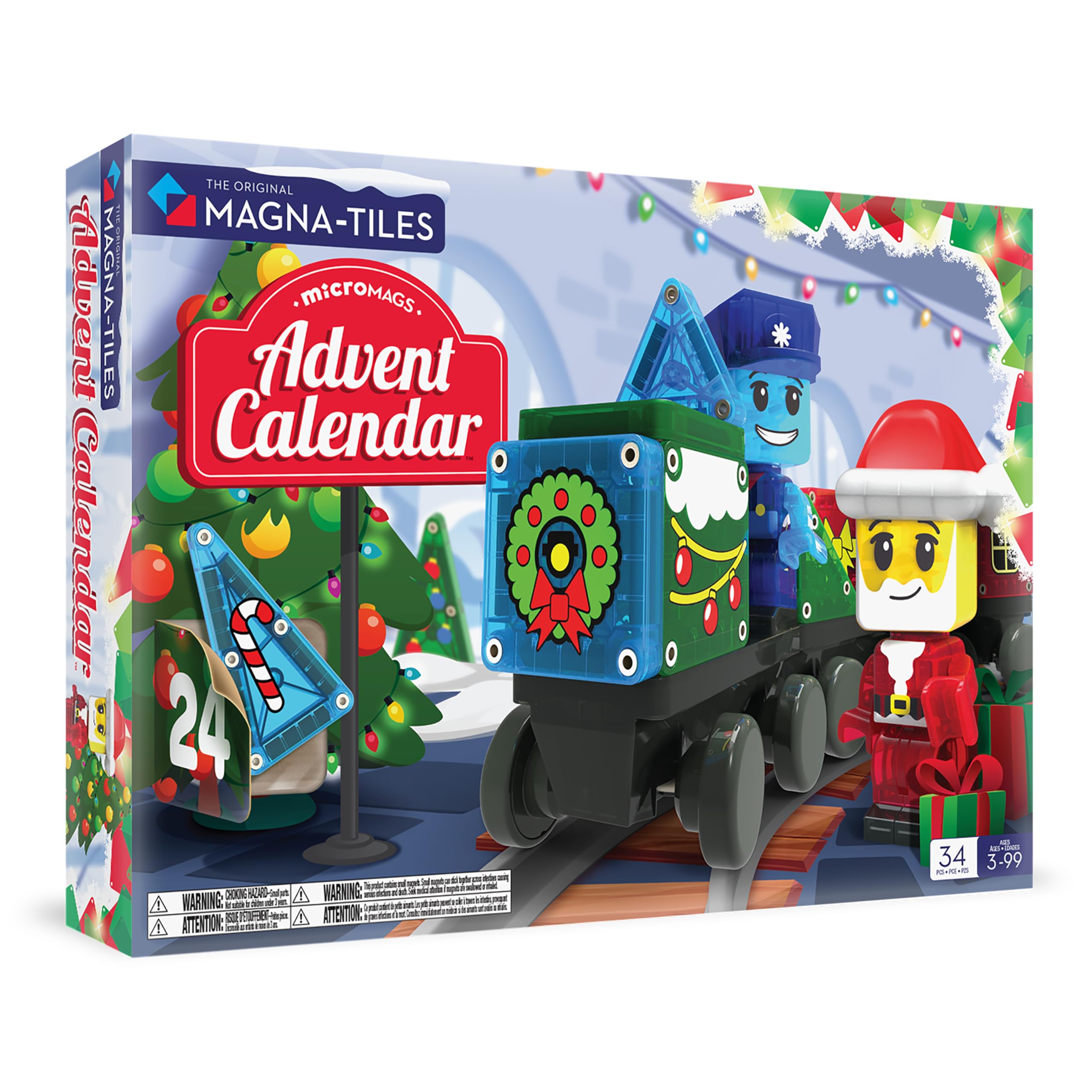
34-piece magnetic micro-building calendar
Approx. $40-55 tier
This is the strongest choice when the daily reveal should become one coherent toy rather than a pile of disposable fillers. The 34-piece set includes decorated micro squares, three isosceles triangles, two figures, and a wheeled chassis that uses the track printed inside the package.
Families repeatedly value the sturdy feel, travel-friendly scale, and ability to reuse the pieces after the countdown. Compared with a full-size magnetic set, though, the payoff arrives slowly: several doors reveal only one or two very small pieces.
Watch-out: Every piece is micro-scale, and some buyers report weak vehicle connections, empty compartments, or pieces that are difficult for a child to pry out. Seasonal stock has been uneven, so confirm the broad $40-55 price tier and inspect the set before December begins.
Standout features
- Thirty-four pieces accumulate into a holiday train and track scene
- Decorated micro squares, triangles, figures, and a wheeled chassis extend play after December
- The compact pieces can join an existing micro-building collection

Best school-age activity pick
24-day magic-and-science activity calendar
Approx. $30-35 tier
This is the best-balanced activity pick for a school-age child who wants something to do after opening each door. Fifteen classic tricks and nine experiments provide more purpose than a calendar built around miniature accessories, and the video instructions help turn a reveal into a short performance.
The strongest feedback describes shared family use, simple instructions, and enough variety to keep the month moving. It is less independent than a figure calendar: an adult may need to stage materials, keep the instruction book from spoiling later days, and help a younger child complete a trick.
Watch-out: Read the activity and material instructions before each day, supervise setup, and store the booklet where it will not reveal future surprises. Check the kit on arrival for missing props because one absent piece can stop that day’s activity.
Standout features
- Fifteen magic tricks and nine science activities create a varied 24-day sequence
- Instructional videos support tricks that are easier to learn by watching
- Most activities lead to a performance or demonstration that can include siblings

24-day experiment-and-gemstone calendar
Approx. $35-45 tier
Choose this for an older child who will enjoy both process and collection. The sequence mixes 13 experiments with 11 specimens, including recognizable stones and a final dig brick, so the calendar has a stronger learning arc than a box of novelty toys.
Detailed instructions and family participation are the recurring strengths. The format is not 24 experiments, however, and several activities require water, waiting time, cleanup, or materials that must be found in a different compartment.
Watch-out: Preview each experiment before opening time and gather any shared tools first. Reports of mislabeled days, missing bottles, and experiments that do not develop as expected make a quick component check worthwhile before the countdown starts.
Standout features
- Thirteen experiments alternate with eleven gemstone specimens
- The final day adds a small dig activity for a pyrite specimen
- A storage pouch keeps the growing rock collection together
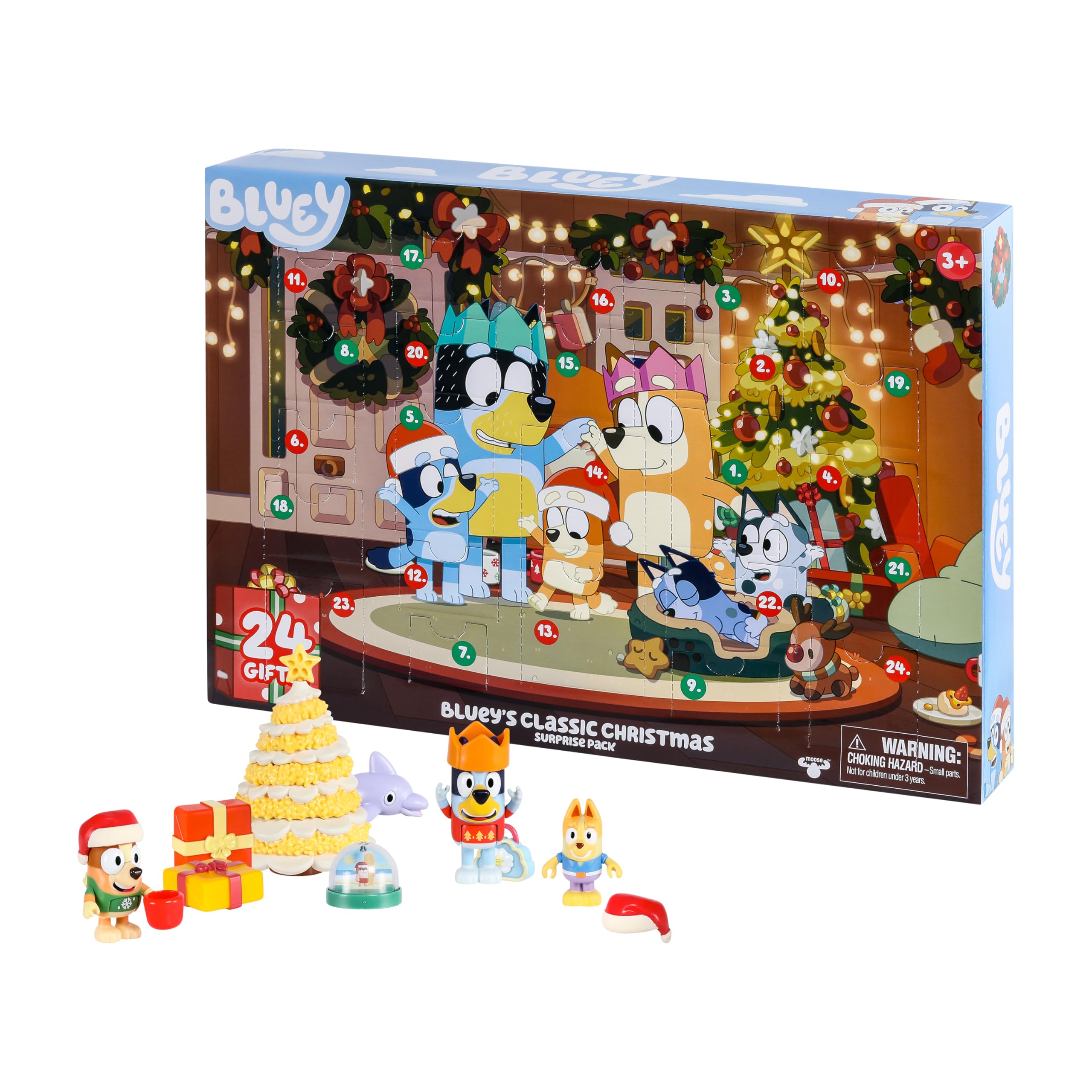
24-day character figure-and-scene calendar
Approx. $20-30 tier
This is the immediate-recognition pick for a child who wants familiar figures more than instructions. Three figures, a buildable tree, accessories, and stickers accumulate into a small holiday scene, so the strongest days have a clear relationship to one another.
What works is the combination of recognizable characters and usable figures rather than 24 anonymous miniatures. The day-to-day value is uneven: a sticker or tiny accessory will not feel equivalent to opening one of the main figures.
Watch-out: The calendar includes very small accessories and several low-substance sticker days. It is not for children under three; count the pieces on arrival and keep a small lidded container nearby so revealed parts do not disappear before the scene is complete.
Standout features
- Three character figures anchor the finished play scene
- Sixteen accessories, five stickers, and a buildable tree spread across the month
- The figures and props can join compatible pretend-play toys after December

24-day modeling-compound activity calendar
Approx. $15-20 tier
This is the best value when the goal is fifteen quiet minutes of making rather than a permanent collection. A daily can, holiday tools, idea cards, and two playmats give young children a repeatable routine without adding dozens of hard plastic miniatures to the toy bin.
Parents often value the imaginative play and reusable tools, especially as an alternative to candy. Compared with the wooden tree, it creates more daily activity but also more cleanup, and the compound itself will eventually dry out.
Watch-out: The package can be mistaken for an outer sleeve, the doors are difficult for small hands, and some cans have arrived dry or missing. The compound contains wheat; check household ingredient needs, inspect the cans early, and keep a backup color ready.
Standout features
- Twenty-three one-ounce color cans plus one two-ounce sparkle can support daily making
- Holiday tools and idea cards turn each opening into a short activity
- Two tear-off playmats organize snowman and gingerbread scenes
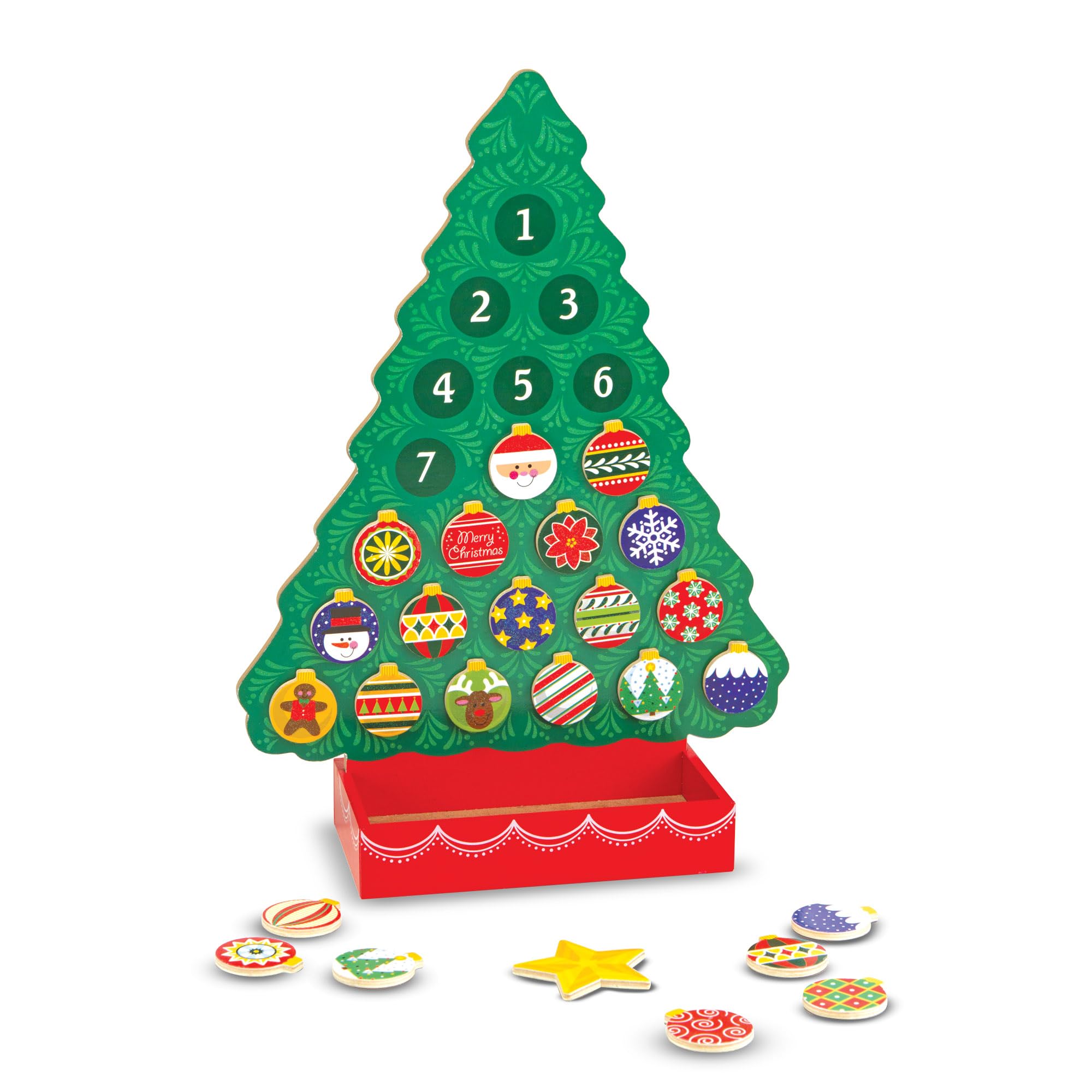
reusable wooden magnetic tree countdown
Approx. $20-30 tier
This is the calmest choice in the group. One ornament moves from the attached storage box to the wooden tree each day, making the countdown visible without promising 24 separate gifts or requiring a new activity setup every morning.
The long-term appeal is sturdy construction, easy storage, and a ritual that works across several ages. It is less surprising than a toy calendar, but that restraint is exactly why families can reuse it instead of replacing it next year.
Watch-out: Small magnetic ornaments still require supervision. Count all 24 ornaments and the star during the return window, then check for warped pieces or weak magnets; missing parts are much harder to replace once December begins.
Standout features
- Twenty-four magnetic ornaments and a final star create a simple nightly ritual
- An attached wooden box stores unused pieces between days and seasons
- The non-consumable format can return every December
Kids advent calendar picks compared
Compare the daily payoff, adult setup, piece scale, and what remains after December. Current price and availability can shift as seasonal stock narrows.
34-piece magnetic micro-building calendarTop pick24-day magic-and-science activity calendar24-day experiment-and-gemstone calendar24-day character figure-and-scene calendar24-day modeling-compound activity calendarreusable wooden magnetic tree countdownHow to choose
Choose an activity-led calendar if
- The child enjoys making, performing, or completing instructions more than collecting miniatures
- An adult can help with setup, cleanup, or a shared experiment on busier days
- A purposeful ten-minute activity matters more than keeping every item forever
Choose a play-and-reuse calendar if
- The child wants pieces that build toward one train, figure scene, or visible tree
- You prefer a countdown that still works as a toy or family ritual after December
- Small parts can be stored and supervised without disappearing around the room
The practical verdict: choose the daily payoff first
The calendar format matters more than the license on the box. Activity calendars ask for time and sometimes adult help, but they give the child something to do that day. Figure and building calendars may have smaller individual reveals, yet their value improves when every piece belongs to one usable scene.
For most school-age children, the magic-and-science set offers the most consistent balance of surprise and purpose. A patient builder may get more long-term value from the micro-building train, while a younger child often benefits from the simpler modeling-compound routine or reusable wooden tree.
Do not treat all 24 doors as equal gifts. Look for a satisfying month-long arc: a performance to learn, a scene to complete, a collection to organize, or a ritual the family will repeat.
Toddler advent calendars: age, piece size, and supervision
An age label is a minimum, not proof that every door will work independently. Toddlers may struggle with stiff perforations, tiny accessories, one-piece days, and toys that require instructions before they become meaningful.
For a younger child, favor a large daily action over a tiny daily object. Moving one magnetic ornament, opening a modeling-compound color, or completing a short adult-led activity is easier to understand than managing dozens of miniature vehicle, figure, or sticker parts.
Any calendar with magnets or small accessories needs close supervision and a storage routine. Keep revealed pieces in an attached compartment or lidded tray, and move the calendar out of reach between openings rather than leaving loose parts on the floor.
Count meaningful days, not just the number on the box
A 24-day label can hide very different value. The science calendar alternates full experiments with gemstone specimens. The character calendar mixes figures with stickers and small props. The building calendar can reveal only one or two micro pieces on a day because the month is designed to assemble one train.
Before buying, scan the piece list rather than only the front image. Count the days that provide a full activity, a main figure, or a substantial reusable part. Smaller connector pieces are reasonable when they complete a coherent build; they feel like filler when the calendar never develops into anything larger.
This is also where expectations differ by age. An older child may appreciate waiting for the final shape, while a preschooler is more likely to judge each morning on whether the reveal is immediately playable.
What will still be useful after December?
The wooden tree has the clearest multi-season value because the calendar itself is the product. The building and character sets can join compatible toys, and the science calendar leaves a small specimen collection. Modeling compound is consumable, but its cutters, tools, and playmats can continue into winter break.
Reuse only matters if the pieces can be stored. Keep the wooden tree’s attached box, use a lidded organizer for figure accessories, and return micro-building pieces to a labeled container rather than mixing them into a large bin immediately.
A reusable calendar can justify a higher first-year price, but do not pay a premium for tiny pieces the child will not recognize or use. Match the after-December value to toys and routines that already work in the household.
When to buy a kids advent calendar
Current-year character and specialty activity calendars arrive unevenly from late summer into fall. The most distinctive sets can disappear before December, while evergreen wooden or modeling formats usually have more substitutes.
Buy the exact building, science, or licensed scene calendar once the current version and price tier are acceptable. Leave enough time to inspect compartments, count reusable pieces, and replace a damaged box before December 1; discovering an empty door halfway through the countdown is difficult to fix.
Do not confuse an early discount with the best value. A volatile product can return to its usual range, and a calendar with poor daily substance is not improved by a small markdown.
Frequently asked questions
What age is best for a kids advent calendar?
Many toy calendars begin at age three, but the better test is whether the child can manage the piece size, wait for a build to develop, and follow any activity instructions. School-age children usually get more independent value from magic, science, and micro-building formats.
Are advent calendars safe for toddlers?
Some are appropriate with close adult supervision, but magnets, miniature figures, and small accessories require particular care. Choose a large daily action, store revealed pieces in a closed container, and follow the age and safety information on the exact listing.
Is an activity advent calendar better than a toy calendar?
An activity calendar is better for a child who enjoys making, performing, or experimenting and has time for setup. A toy calendar is better when the pieces build one scene or join a collection the child already uses.
Can siblings share one advent calendar?
Yes, especially when the daily reveal leads to a shared experiment, trick, building project, or reusable tree. Set a rotation for opening doors and choose a format whose activity can include more than one child.
When should I buy an advent calendar for kids?
Aim to have the selected calendar inspected before late November. Distinctive current-year building, science, and character sets can thin earlier, while reusable wooden and modeling formats usually offer more substitute choices.
About this guide
This guide compares each calendar by daily substance, age fit, piece scale, adult setup, reuse value, seasonal pricing behavior, availability, product specifications, and recurring customer feedback. It is editorial research, not a hands-on test.
Positive feedback patterns explain why a product earns a place, while recurring complaints become the Watch-out for that specific calendar. Confirm the selected version, age guidance, contents, and current availability before ordering.