Halloween Decor - Buying Guide
DIY Bubbling Cauldron and Potion Decor: 3 Best Kits and Safer Buying Notes for 2026
DIY bubbling cauldron decor is one of the most tempting Halloween categories because the product photos look magical. It is also one of the easiest places to overbuy. Some kits are visual tabletop decor, some are basic cauldron buckets, and some mist-maker listings promise more fog than buyers actually see.
This guide keeps the recommendations tight. The best route for most shoppers is a visual bubbling kit if you want a finished look, a multi-size bucket set if you want to build your own table or porch scene, and only cautious consideration for mist-maker potion sets. For table-specific use, also see our Halloween table decor guide.
FestTree is reader-supported. As an Amazon Associate we earn from qualifying purchases.
Our top picks for DIY cauldron decor
Choose the visual bubbling kit for a finished centerpiece, the bucket set for a flexible DIY build, and the mist option only when there is time to test output, power, and cleanup before the event.
Top picks in detail
Best Visual DIY Kit
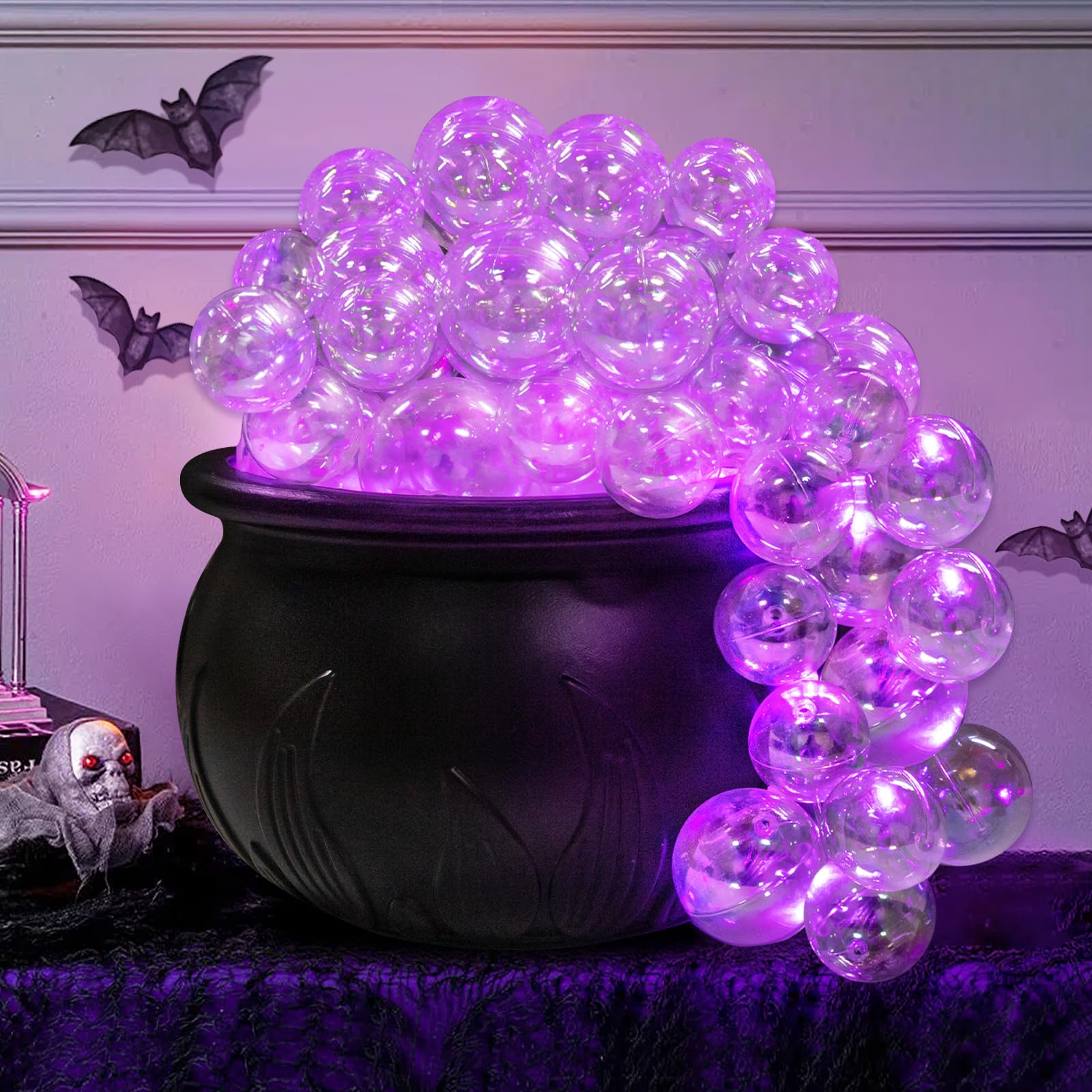
DIY bubbling cauldron set
Approx. $20-30 tier
This is the main pick because it gives shoppers the visual promise they are usually searching for: a cauldron scene with lighting, bubble texture, and a finished Halloween look.
The correct framing is important. This is a visual DIY kit, not a sturdy appliance, serving bowl, or guaranteed fog machine. It belongs on a mantel, entry table, buffet corner, candy station, or party shelf where people see the effect from a few feet away.
The trade-off is durability and fullness. Critical feedback mentions units stopping after a few days, value concerns, a less-full bubble look than the photo, and some assembly disappointment. Buy it early enough to build and test it before a party.
Watch-out: Assemble the kit early and test the lighting, bubble fullness, and stability before relying on it as the main effect.
Best for: visual cauldron centerpieces, mantels, buffet corners, party shelves, and shoppers who want a finished look.
Standout features
- 10 in. profile
- Plastic construction
- Remote control included
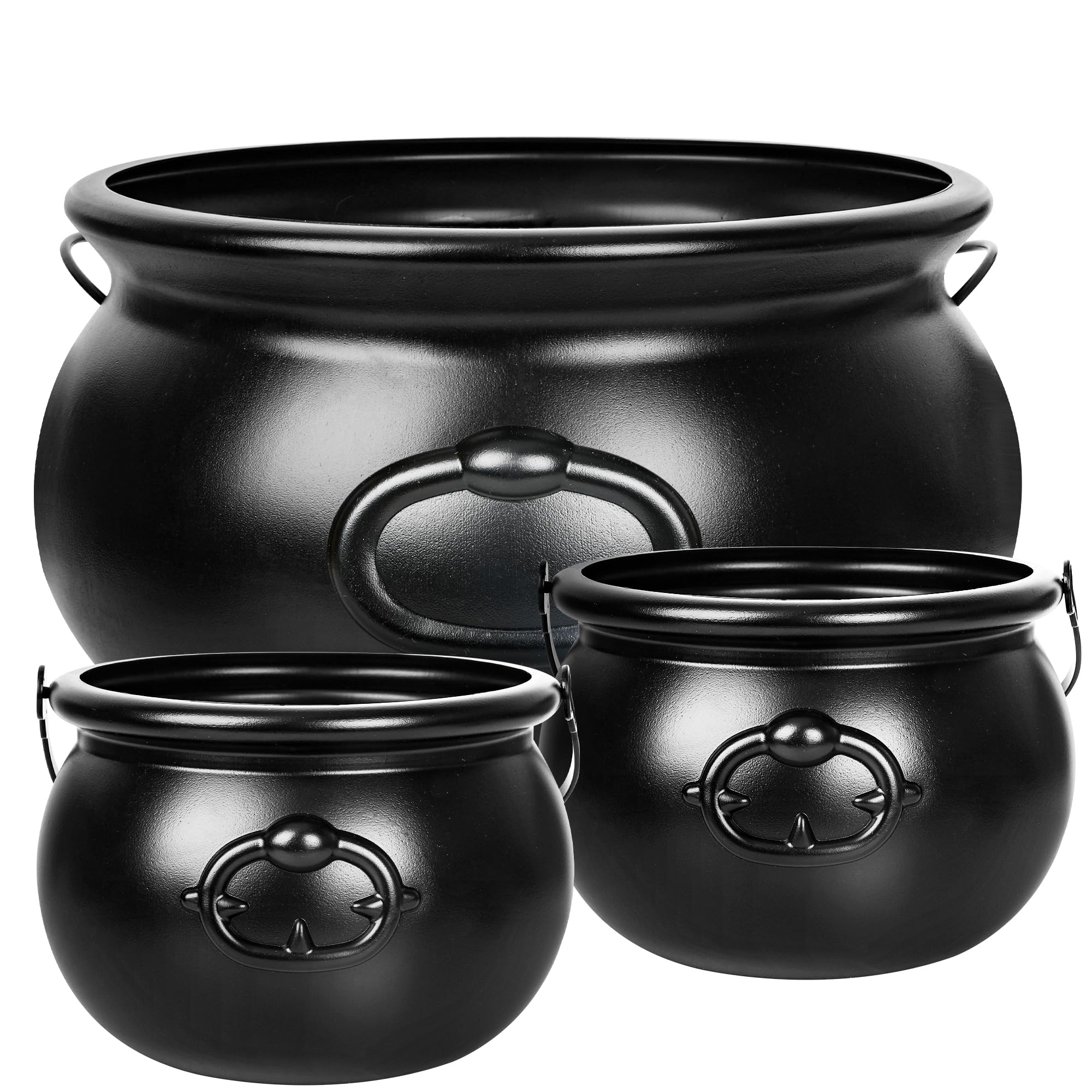
Three-piece black cauldron bucket set
Approx. $20-30 tier
If you want to build your own scene, a multi-size bucket set is more flexible than one big cauldron. This set gives a larger piece plus smaller accents, which lets you stage candy, LED lights, faux moss, potion bottles, or wrapped favors at different heights. Buyers most often praise the useful size range, versatility, and party-ready format.
It can move from a table to a porch corner to a kids’ party station. It also works if you already own lights or other Halloween fillers and only need the black cauldron shapes.
The caveat is value and condition. Some buyers see these as basic plastic buckets, and critical reviews mention returned or scuffed items. Inspect the pieces on arrival and remember that the smaller buckets are mostly decorative.
Watch-out: Confirm the interior dimensions and intended use; decorative cauldrons are not automatically food-safe or heat-safe.
Best for: DIY builders, candy tables, porch scenes, party favors, and shoppers who already have lights or fillers.
Standout features
- 3-piece set
- Plastic construction
- Tabletop-scale accent
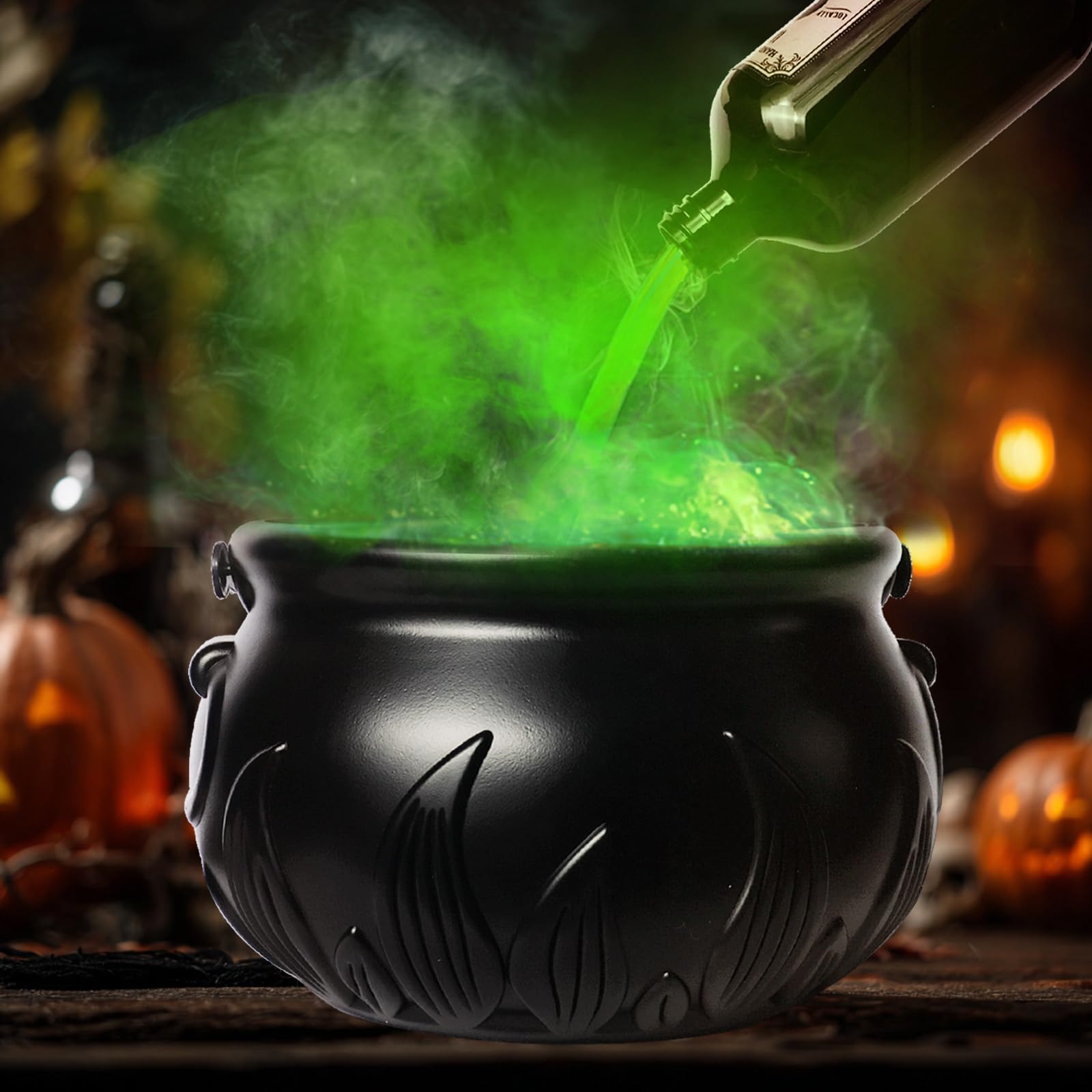
Floating potion mist-maker set
Approx. $20-30 tier
This is the optional pick, not the safest pick. The style fits the search intent: a cauldron, potion look, and mist-maker effect for an indoor Halloween scene. It can be useful if you specifically want floating-potion styling and are comfortable with a less-established effect kit.
Compared with the bubbling cauldron kit, this leans more into the mist/floating-potion look.
The caveat is exactly why it is optional. Available feedback is limited, and critical feedback says the mist output can be weak compared with the listing video. Do not buy it as the only centerpiece for a party unless you can test it early and return it if the effect disappoints.
Watch-out: Protect nearby surfaces from splash or mist, test the power unit early, and dry every part before storage.
Best for: shoppers who specifically want a floating-potion look and can test the mist effect before Halloween.
Standout features
- Three-dimensional focal shape
- Seasonal storage required
- Mist set
Cauldron decision framework
- Fast finished look: Best route: Visual bubbling kit; Why: It includes the main scene pieces and lighting
- Flexible DIY setup: Best route: Multi-size bucket set; Why: You control fillers, lights, and placement
- Mist or potion effect: Best route: Optional mist-maker set; Why: Best only if you can test early
- Candy or snacks: Best route: Use table-safe bowls or wrapped candy; Why: Many plastic cauldrons are decorative
- Food serving: Best route: Use ceramic or confirmed food-safe pieces; Why: Do not assume party props are food-safe
The biggest mistake is buying a fog or mist product as if the effect is guaranteed. For a reliable Halloween scene, use lighting, height, and fillers first. Treat mist as a bonus.
How to build a safer bubbling-cauldron scene
Start with a stable table, mantel, or covered porch surface. Put the cauldron on a tray or runner so any loose filler stays contained. Add battery LED lights or a built-in light effect, then use lightweight filler such as faux bubbles, cotton, tissue, or decorative mesh. Keep real flame away from plastic, webbing, and fabric.
If you are using a mist-maker, test it with the exact water level and surface you plan to use. Do not place electronics near loose candy or uncovered food. For parties, run the effect before guests arrive so you can hide cords, replace batteries, and adjust the angle.
For a table setup, keep the cauldron off the main serving path. For a porch setup, avoid uncovered rain and wind. For a kids’ party, choose LED glow over water-based mist.
When to buy DIY cauldron decor
Late August through early September is the safest window. Visual kits and potion sets are more style-specific than plain buckets, so exact designs may disappear as Halloween approaches.
Plain plastic buckets can wait longer. The visual kits should not, especially if you need time to test lights, mist, bubbles, or assembly before a party.
What to skip
Skip failure-prone fog punch bowls with repeated no-fog complaints, missing parts, or poor instructions. Skip any mist kit that you cannot test before your event. Skip plastic cauldrons for hot food or heavy serving unless the listing clearly supports that use. Skip dry ice effects unless you already know the safety requirements and can keep them away from kids and pets.
Quick build ideas
- Mantel cauldron: bubbling kit, black lace runner, bats on the wall, and flameless candles.
- Candy station: multi-size buckets, wrapped candy, small signs, and amber LED lights.
- Potion shelf: optional mist set, small bottles, purple/orange lights, and one black backdrop.
- Porch corner: large bucket, webbing, witch hats overhead, and flame bulbs nearby.
Frequently asked questions
What is the easiest DIY bubbling cauldron decor?
A visual bubbling cauldron kit is easiest because it already includes the main effect. Build it early so you can adjust the fullness and lighting.
Are mist-maker cauldron kits reliable?
They vary. Some create a good mood effect, while others produce weaker mist than expected. Treat mist as a bonus and test before the party.
Can I use a Halloween cauldron for food?
Only if the product clearly supports food use. Many plastic cauldrons are decorative and are safer for wrapped candy, favors, or dry fillers.
What can I put in a cauldron for Halloween?
Use wrapped candy, LED lights, faux bubbles, tissue, mesh, potion bottles, small pumpkins, or dry decorative filler. Avoid real flame around plastic.
When should I buy a bubbling cauldron kit?
Buy in late August or early September if you want a specific visual kit. That gives time to test assembly, lights, mist, and return options.
About this guide
This guide was researched and written by the FestTree editorial team. We synthesize pricing and availability signals, aggregated customer feedback where available, product specifications, critical-risk patterns, and category-level comparisons. These recommendations are based on editorial research rather than first-hand testing.